
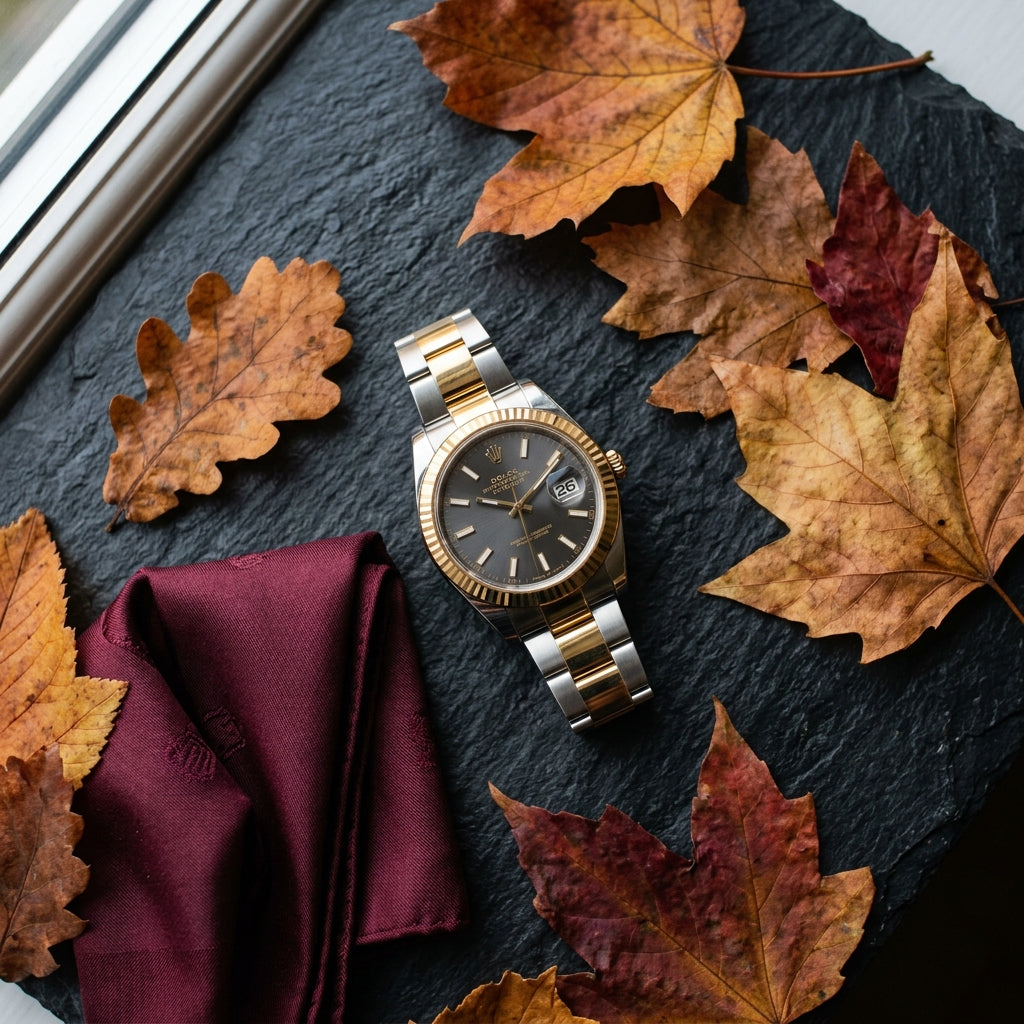
In the United Kingdom, we have a long and distinguished relationship with horology. From the marine chronometers that once guided the Royal Navy across uncharted seas to the pocket watches carried by Victorian gentlemen, timekeeping has always been woven into our cultural fabric. Choosing a luxury watch, then, is not merely a commercial transaction — it is an entry into a tradition.
This guide is written for those approaching that decision for the first time. Whether your budget sits at £500 or £50,000, the principles remain the same.
1. Define Why You Are Buying
Before you set foot in a boutique or browse an online catalogue, ask yourself a fundamental question: what is this watch for? The answer will shape every subsequent decision.
Some buyers want a daily wearer — something robust enough to survive the commute, the boardroom, and the weekend in the Cotswolds. Others are seeking a dress watch: a refined, slim piece that appears only at dinner or formal occasions. A growing number approach their first luxury watch as a long-term investment, eyeing references with proven resale strength.
There is no wrong answer. But clarity of purpose will prevent you from buying a 44mm diver's watch when what you actually needed was a slim dress piece for black-tie events — or vice versa.
2. Set a Realistic Budget — and Stick to It
The luxury watch market in the UK spans an extraordinary range. At the entry level, brands such as Tissot, Longines, and Frederique Constant offer excellent Swiss-made movements from around £300 to £1,500. The mid-tier — between £1,500 and £5,000 — is where you begin to encounter in-house movements, stronger heritage, and significantly better finishing. Above £5,000, you enter the world of Rolex, Omega, IWC, and Jaeger-LeCoultre — brands whose pieces regularly appreciate in value over decades.
It is worth noting that in the UK, VAT is charged at 20% on new watch purchases. If you are considering a pre-owned piece — an increasingly popular choice — you may find the same reference for considerably less through reputable grey market dealers or certified pre-owned programmes run by authorised retailers.
One word of caution: do not stretch your budget to the point of financial discomfort. A watch purchased under strain is rarely worn with pleasure. Buy the best you can comfortably afford.
3. Understand What Moves the Hands
At the heart of every watch is its movement — the engine that drives the hands. For a first-time luxury buyer, understanding the main categories will help you make an informed choice.
Swiss Automatic — The most prestigious and romantic option. Powered by the natural motion of the wearer's wrist, an automatic winds itself through a rotor as you go about your day. No battery required. Brands such as Rolex, Omega, and Tudor use their own in-house calibres, while many respected manufacturers rely on trusted movements from ETA or Sellita.
Swiss Quartz — Often underestimated. Quartz movements are driven by a battery and regulated by a vibrating crystal, making them significantly more accurate than mechanicals — typically within 15 seconds per month. Brands like Grand Seiko and Breitling produce quartz watches that are every bit as desirable as their mechanical counterparts.
Spring Drive — A uniquely Japanese innovation from Grand Seiko that combines the romanticism of a mechanical movement with the accuracy of a quartz regulator. It represents perhaps the most ingenious timekeeping solution available at any price point.
4. Case Size, Material, and Dial
Once you have settled on a movement type and a budget, the aesthetic decisions begin. Case size is often the first point of contention among new buyers. Larger watches — 42mm and above — dominated fashion through the 2000s and 2010s, but the market has shifted decisively toward classic proportions. A 38mm to 40mm case will suit most wrists and feel just as relevant in thirty years.
Case material matters too. Stainless steel is the most practical and, in the case of sports watches from major brands, often the most collectible. Yellow gold remains eternally elegant on a dress watch. Titanium offers exceptional lightness for those who dislike the weight of a larger piece.
Dial colour deserves equal attention. A white or cream dial reads as classic and versatile. A deep blue or slate grey stands out without being ostentatious. A black dial conveys authority. Whatever you choose, make sure it excites you each time you raise your wrist — because you will be looking at it every single day.
5. Buy From a Reputable Source
In the UK, the safest purchases are made through authorised dealers (ADs) or through well-established pre-owned specialists with verifiable authentication processes. Avoid private sellers on general marketplaces unless you have significant experience identifying fakes — the replica market has become alarmingly sophisticated.
Reputable names in the UK pre-owned market include Watches of Switzerland (certified pre-owned), Watchfinder & Co., and a number of boutique dealers operating out of London's Mayfair and the Northern Quarter in Manchester. Always ask for original box and papers where possible — these significantly affect resale value.
6. Think Long-Term
The best advice any watch retailer can offer a first-time buyer is this: buy something you genuinely love. Trend-chasing in horology rarely ends well. The references that hold their value — and their emotional power — are almost always the classics. A Rolex Submariner, an Omega Seamaster, a Longines Heritage Piece — these are watches that people wear for decades and then pass to their children.
Your first luxury watch should not feel like a transaction. It should feel like a beginning.


Leave a comment
This site is protected by hCaptcha and the hCaptcha Privacy Policy and Terms of Service apply.